Sarmizegetusa Regia
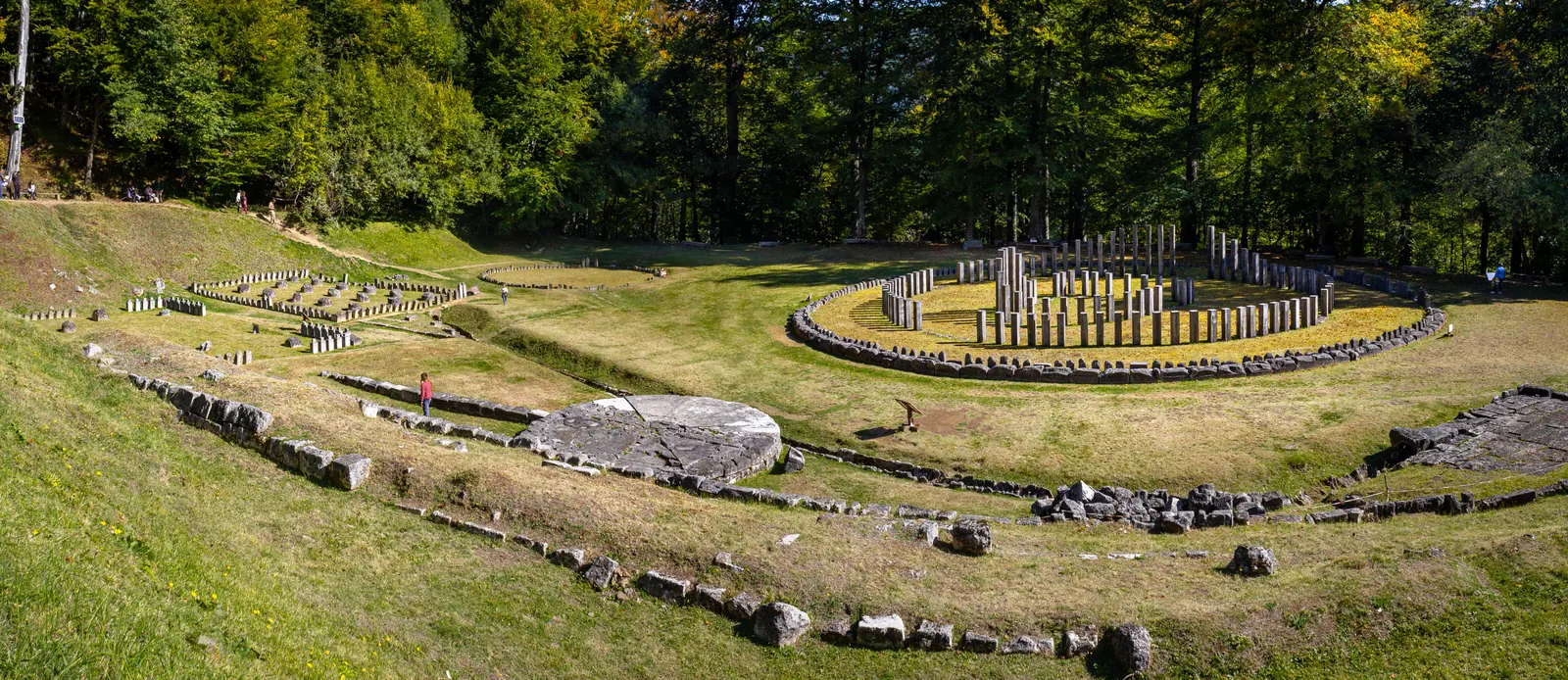
Sarmizegetusa Regia, the spiritual and political capital of Dacia, housed circular and rectangular sanctuaries built with a precision that still raises questions – perhaps sacred geometry?
For the Dacians, life was not separate from the divine. Every corner of nature had a force, a spirit, a meaning. Their religion was not just a collection of rituals, but a living philosophy. At the centre of this belief stood Zalmoxis, an enigmatic god, sometimes considered immortal, at other times a great teacher who had withdrawn into caves to reach the truth.
The priests had a central role – they were not only intermediaries between people and gods, but also healers, astronomers, keepers of knowledge. Sarmizegetusa Regia, the spiritual and political capital of Dacia, housed circular and rectangular sanctuaries built with a precision that still raises questions – perhaps sacred geometry? perhaps lost codes?
It is believed that the Dacians did not fear death – a conviction that made them fearless in battle. For them, the soul went to Zalmoxis, to a land of light. They were, in a deep sense, connected with the sky.